Shipping From Northern Ireland to GB and Ireland: What Small Brands Need to Know
By Nathan McClintock · · Last updated · 6 min read
Shipping from Northern Ireland to Great Britain and the Republic of Ireland starts with understanding the direction your goods are travelling, not treating every parcel as the same post-Brexit movement. This guide explains the practical questions I would work through with a small online brand, while leaving product-specific customs and tax decisions to current official guidance and qualified advisers.

Start with the route, not the word Brexit
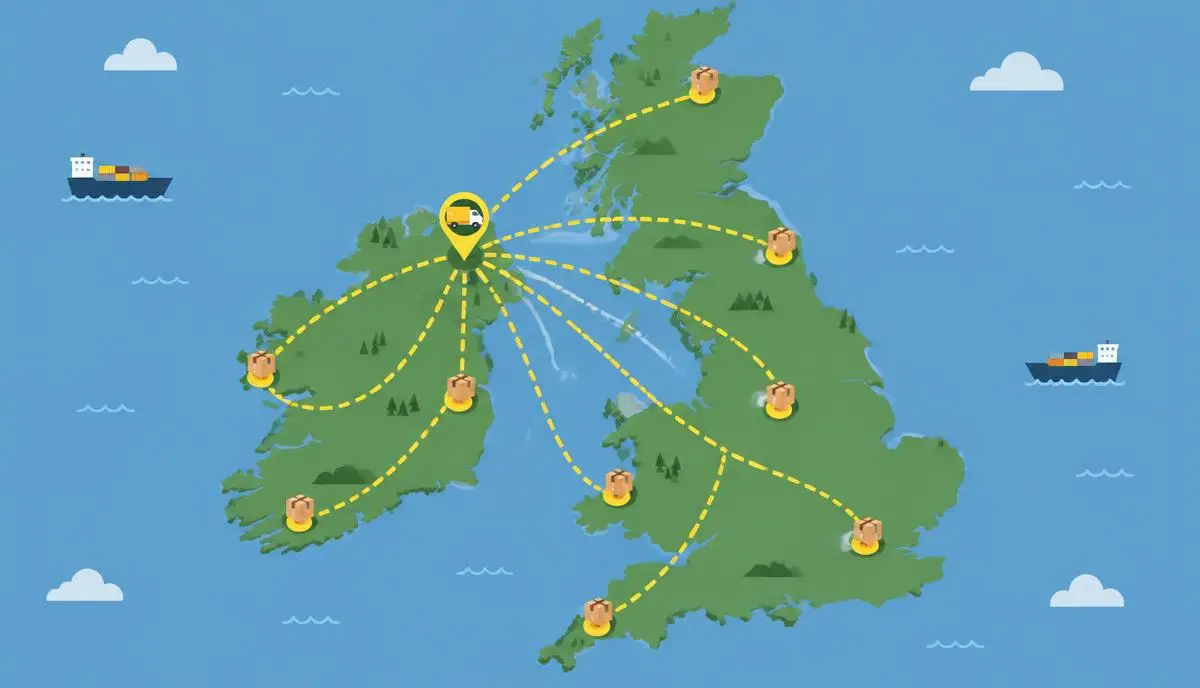
Write down where your stock is physically held, where the customer is and what you are sending. A parcel leaving Belfast for Manchester is not the same movement as stock arriving from Manchester into Belfast. A parcel leaving Belfast for Dublin needs its own checks too.
That sounds basic, but guidance about goods coming into Northern Ireland is often mistaken for guidance about orders going out. Search results and carrier help pages can cover different directions without making the distinction obvious at first glance.
For example, imagine a Lisburn stationery brand with stock already in Northern Ireland. Its orders to Leeds and Cork need separate service settings. A supplier's delivery from England into Lisburn is a third workflow, not evidence that the outgoing customer parcels need identical paperwork.
Keep these routes separate in your delivery policy, carrier account and internal packing instructions.
The Windsor Framework in plain English
The Windsor Framework sets arrangements for goods movements involving Northern Ireland. For an online shop, the important point is that Northern Ireland's position differs from Great Britain's; the rules depend on the movement, the goods and sometimes the recipient.
The parcel arrangements explained in HMRC's Windsor Framework guidance concern movements from Great Britain to Northern Ireland. Do not automatically apply those requirements to parcels travelling the other way. Check the direction and customer type on the relevant page before changing your checkout or paperwork. 1
This is practical background, not legal or tax advice. Start with HMRC's overview of trading and moving goods involving Northern Ireland, then check the guidance for your particular movement. Product controls and VAT questions need their own attention; a shipping label cannot settle them.
If you buy stock from GB to sell on to customers in Ireland, explain that onward destination when seeking advice. Do not assume arrangements intended for goods staying in the UK cover every supply chain.
What changes for parcels going to Great Britain?
For qualifying Northern Ireland goods, unfettered access generally allows movement to the rest of the UK without the routine customs processes associated with an overseas export. However, qualification and exceptions matter: a Northern Ireland dispatch address alone is not a reason to assume every consignment qualifies. 1
Before setting up a GB service, establish whether your goods qualify and whether any special requirements apply. Ask for advice if stock is under a customs procedure, its status is unclear, or your products fall into a controlled category.
For an ordinary stationery order from Belfast to Birmingham, the practical starting point is an appropriate GB parcel service, accurate address details and compliant packaging. Do not add a customs form merely because you have read about GB-to-NI changes.
Also ask the carrier whether the route involves transit through Ireland and whether that affects the information it needs. HMRC's qualifying-goods guidance covers indirect movements too, so check the applicable conditions rather than assuming the physical route is irrelevant. 1
Do parcels to the Republic of Ireland need customs declarations?
For ordinary goods in free circulation moving directly from Northern Ireland to Ireland, customs declarations are generally not required simply because the destination is across the border. HMRC distinguishes movements between Northern Ireland and the EU from movements involving non-EU countries. Check its current guidance before deciding what applies to your goods. 5
That does not mean every product can travel without checks. Controlled goods, excise products and goods under customs procedures can raise additional requirements. Food, plants and animal products need particular care; ask the relevant authority and carrier before offering delivery.
A Newry print shop sending an ordinary art print directly to Galway should not start from the assumption that a GB-to-EU customs workflow applies. Equally, a business sending stock directly from a GB warehouse to an Irish customer cannot treat that as an NI dispatch just because the business owner lives in Belfast.
If your booking system requests customs information unexpectedly, stop and check the selected origin, service and route. Do not enter invented values or mark a commercial sale as a gift to get through the screen.
Customs treatment and VAT are separate questions. Ask your accountant about your own sales, registration and reporting obligations rather than assuming that no routine customs declaration means no tax administration.
Compare the routes before choosing services
This table is a planning aid, not a substitute for checking your goods and the latest rules.
| Movement | Practical starting point | Check before dispatch |
|---|---|---|
| NI to GB | Check qualifying-goods status and choose a GB service | Exceptions, restrictions and any transit requirements |
| NI to Republic of Ireland | Check the NI-to-EU position for the goods | Product controls, service coverage and tax obligations |
| GB supplier to NI | Use current Windsor Framework guidance | Business or consumer movement and onward destination |
| GB warehouse to Irish customer | Treat as a separate GB-to-EU movement | Applicable export, import and carrier requirements |
For mixed fulfilment locations, make sure the order uses the actual dispatch origin. One blanket shipping rule can cause problems when some products leave Belfast and others leave a supplier elsewhere.
Which couriers handle which parcels?
Pack & Post NI uses Royal Mail, Evri and DPD. I would choose a service around the actual destination, packed size, weight and contents rather than declaring one courier the answer for every order.
For GB orders, ask which services are available from your NI collection address, what tracking they provide and what their delivery estimates mean. For Ireland, confirm that the specific service accepts NI-origin parcels to the Republic; do not assume every option on an account supports the same destinations.
Ask each carrier about restricted contents, compensation conditions, remote-area treatment, address requirements and returns. Check the current service terms rather than relying on another seller's experience with a different account.
My Royal Mail, Evri and DPD guide helps structure that comparison. For costs, compare the complete packed parcel rather than the headline label price alone.
Keep the daily process simple
Create a product record with clear descriptions, weights, packed dimensions and any restrictions. Keep supplier and stock-status information available where it matters. Good records make it easier to answer a carrier's question without delaying dispatch.
Separate NI, GB and Republic of Ireland delivery options at checkout. Collect complete address details, including an Eircode where available for Irish addresses, and request contact information in line with your carrier's requirements and privacy obligations.
Test an order for each destination before promoting delivery there. Check the label, confirmation email, delivery estimate and return instructions. Make sure customers understand where returns go; an outbound service does not automatically provide a suitable return route.
I run Pack & Post NI in Belfast and ship to NI, GB and ROI. You can see how fulfilment works, review pricing, or request a quote with your products and destination mix. Carrier acceptance and any regulatory requirements still need checking for your goods.
FAQ
Do all NI-to-GB parcels need customs forms?
No. Qualifying Northern Ireland goods generally benefit from unfettered access, subject to conditions and exceptions. Check current HMRC guidance and your goods' status rather than applying rules for the opposite direction.
Should I attach a customs declaration to every parcel going to Ireland?
Not automatically. Ordinary goods in free circulation moving directly from NI to Ireland generally do not require one solely for that movement. Check exceptions, product controls and the carrier's requirements before dispatch.
Does using a fulfilment partner remove my compliance responsibilities?
No. A partner can handle agreed storage and dispatch tasks, but accurate product information and appropriate compliance arrangements still matter. Agree responsibilities explicitly and seek specialist advice when the position is unclear.
Where should I check when the rules are unclear?
Start with current HMRC guidance for the exact route, then ask the carrier about its service requirements. Use an accountant or customs adviser for product-specific tax or customs questions rather than guessing at checkout.
Looking for hands-on support? Explore our 3PL in Northern Ireland service for storage, packing and shipping from Belfast.