Packaging Tips to Cut Postage Costs and Breakages
By Nathan McClintock · · Last updated · 6 min read
The cheapest packaging is not always the packaging that produces the lowest overall cost. For a small Northern Ireland online shop, the useful target is a parcel that protects the product, fits the right courier service and avoids paying to send unnecessary air.
Start with the packed parcel, not the empty box
I’m Nathan, founder of Pack & Post NI in Belfast. Before running this business, I worked as an Evri and DHL Express courier driver, so I think about packaging as something that must travel, not just look tidy on a table.
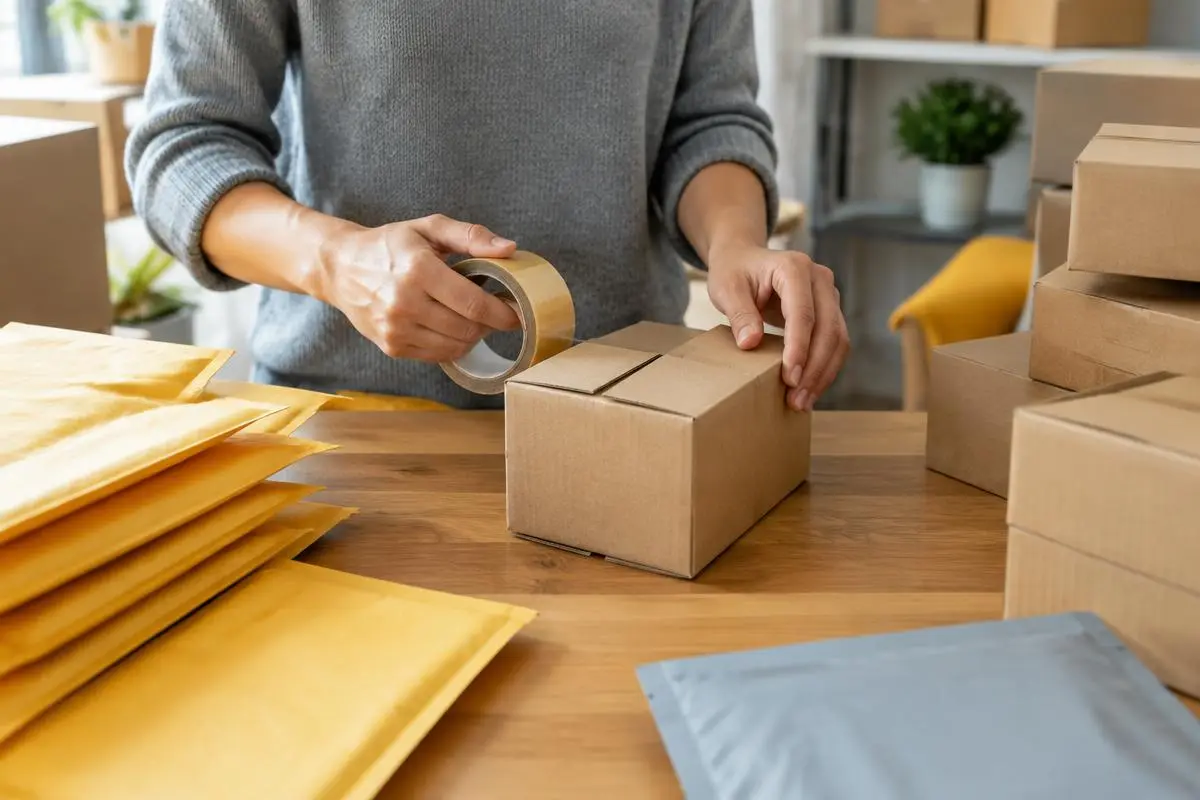
Start by measuring and weighing a finished parcel. Include the product, outer packaging, protective material, inserts and anything else travelling with the order. Record the outside dimensions after sealing, including any bulges.
A County Down clothing brand might weigh a sweatshirt and assume it fits a particular service. Add a bulky presentation box and the relevant parcel category could change. Equally, a compact product may need more protection than its bare dimensions suggest.
Make a simple packing record for your common orders. Include the packaging type, packed dimensions, packed weight and any special instructions. This gives you something repeatable to compare against courier requirements.
Right-size boxes and mailers
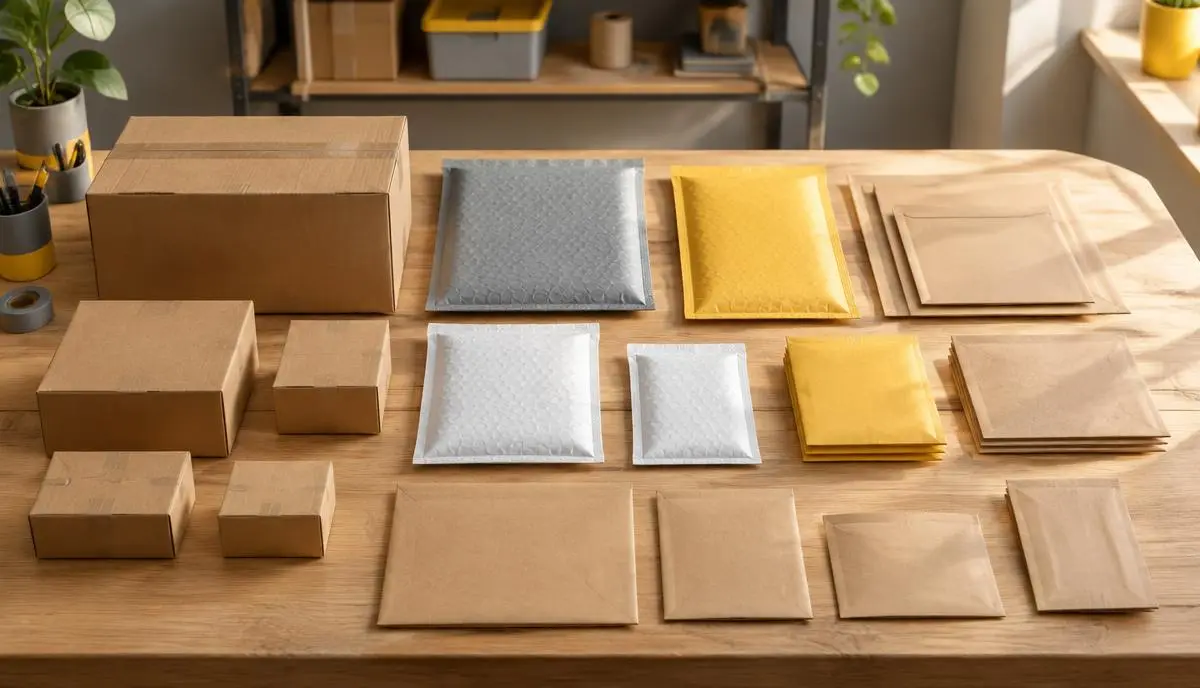
A large box with lots of empty space usually needs more filler and allows more movement. A box that is too small can put pressure directly on the product or leave fragile edges exposed. Aim for a fit that leaves room for the protection the item actually needs.
Mailers can work well for suitable soft goods, while rigid products may need a box or structured protection. Do not choose solely by appearance. A paper sleeve that looks lovely on a shelf might offer little resistance to crushing in transit.
| Order type | Packaging worth testing | Main thing to check |
|---|---|---|
| Folded clothing | Right-sized, securely closed mailer | Bulging, moisture protection and snagging |
| Small accessories | Protective mailer or compact box | Crushing, punctures and loose components |
| Ceramic product | Strong box with suitable cushioning | Movement and pressure around fragile points |
| Mixed-product order | Box with separated contents | Heavy items damaging lighter items |
These are starting points, not guarantees. Test the actual product, especially if it has sharp corners, delicate attachments or a finish that marks easily.
For a Derry jewellery seller, one compact box size might cover several products with different internal supports. That is more useful than buying a different outer box for every necklace, provided each variation remains properly protected.
Understand weight and size pricing
Courier pricing is not always based on weight alone. Depending on the carrier, service and destination, limits may involve weight, individual dimensions, combined measurements or volumetric weight. Volumetric pricing reflects the space a parcel occupies, using the carrier’s own calculation.
There is no single formula or size allowance that you should apply to every service. Check current terms for the specific shipping product you are buying. A parcel accepted under one service is not automatically suitable for another.
Measure the sealed package at its widest points and use a suitable scale. Keep a sensible margin below any applicable limit rather than packing exactly to a boundary with no room for variation.
Imagine a Belfast homeware brand sending one lightweight lampshade. Its low weight does not necessarily make it cheap to ship because it still occupies space. A smaller outer pack may help, but only if it does not compress or damage the shade.
My Royal Mail, Evri and DPD comparison is a starting point for choosing between services. Always compare the actual parcel and destination, not just the headline name of the carrier.
Use protection where it does the most work
Protective material should stop movement, separate surfaces and cushion vulnerable points. Filling the top of a box with paper does little if a heavy item can slide sideways into something fragile underneath.
Wrap or separate items that could scratch each other. Support handles and projections without forcing pressure onto them. If you sell liquids, consider closure security and suitable containment alongside any carrier restrictions for the product.
For a small ceramics business in Armagh, a mug needs attention around its handle as well as its body. A neat outer box is not enough if the handle can hit the box wall. A mixed order may need a divider so another item cannot knock into it.
Choose materials through testing rather than assuming more bulk means more protection. Paper, card inserts and other cushioning options perform differently depending on weight, shape and moisture exposure. Reused packaging also needs checking for strength and condition.
Avoid making broad environmental claims unless you can support them. Give customers accurate disposal information for the actual materials supplied rather than describing every component as recyclable by default.
Test the whole packing method
Write down a repeatable packing sequence, then try it with the products you actually sell. Check for internal movement, stressed corners, insecure closures and items that sit too close to the outer surface.
A gentle movement check can reveal obvious gaps, but it does not prove a fragile parcel will survive the courier network. Use appropriate testing for the product, review carrier guidance and consider specialist packaging advice for valuable or particularly fragile goods.
Send a controlled trial parcel where useful and inspect both the product and outer packaging on arrival. Photograph the packing method so it can be repeated. If a test fails, change one feature at a time so you know what improved the result.
Record damage reports alongside the product, box type and order combination. My guide to handling returns explains why returned stock should be checked before going back on the shelf.
Add branding without unnecessary bulk
Branding works best when it fits into a reliable protective pack. A well-positioned insert or simple wrap can create a tidy opening experience without requiring a larger outer box.
At Pack & Post NI, gift wrap and inserts start from 30p per order, ex VAT. Agree what you need before sending materials in; a standard insert and a complicated presentation arrangement are different packing instructions.
For a North Coast accessories brand, one care card could explain storage and cleaning while carrying the brand’s colours. That may be more useful than several leaflets, especially if the customer wants to find the product quickly.
Keep promotional messages accurate and check marketplace rules where relevant. If you sell through social channels, my guide to TikTok Shop fulfilment covers presentation alongside dispatch planning.
Compare the complete fulfilment cost
At Pack & Post NI, pick and pack is £2.00 per order plus 25p per extra item, with a box or mailer included. Labels are charged at the discounted courier rate plus 50p. All prices are ex VAT; discuss any specialist packaging requirements rather than assuming every presentation option is included.
Compare packaging and postage together. A different box might reduce parcel size, but it is not an improvement if breakages increase. Equally, a premium presentation box may be worthwhile for your product without being the cheapest shipping option.
Check pricing or request a quote with product measurements, typical order combinations and destinations. Pack & Post NI uses Royal Mail, Evri and DPD and ships to Northern Ireland, Great Britain and the Republic of Ireland.
FAQ
Will a smaller box always reduce postage?
No. The parcel may remain within the same charging band, and the service might price mainly by another measure. Compare the finished parcel against the chosen service’s current rules before changing your packaging.
Are mailers suitable for every small product?
No. A small item can still be crushable, sharp or fragile. Choose protection based on the product and journey, not size alone, and test whether the package holds its shape and protects the contents.
Can branded inserts affect shipping costs?
They can if their weight or required packaging changes the parcel category. A light card may make little difference, but measure the complete order rather than treating extras as weightless.
What should I send you for a packaging discussion?
Share product dimensions, weights, fragile features, photographs and common order combinations. Include your current packaging and destinations so the discussion can focus on real parcels rather than an estimate based only on the unpacked product.